

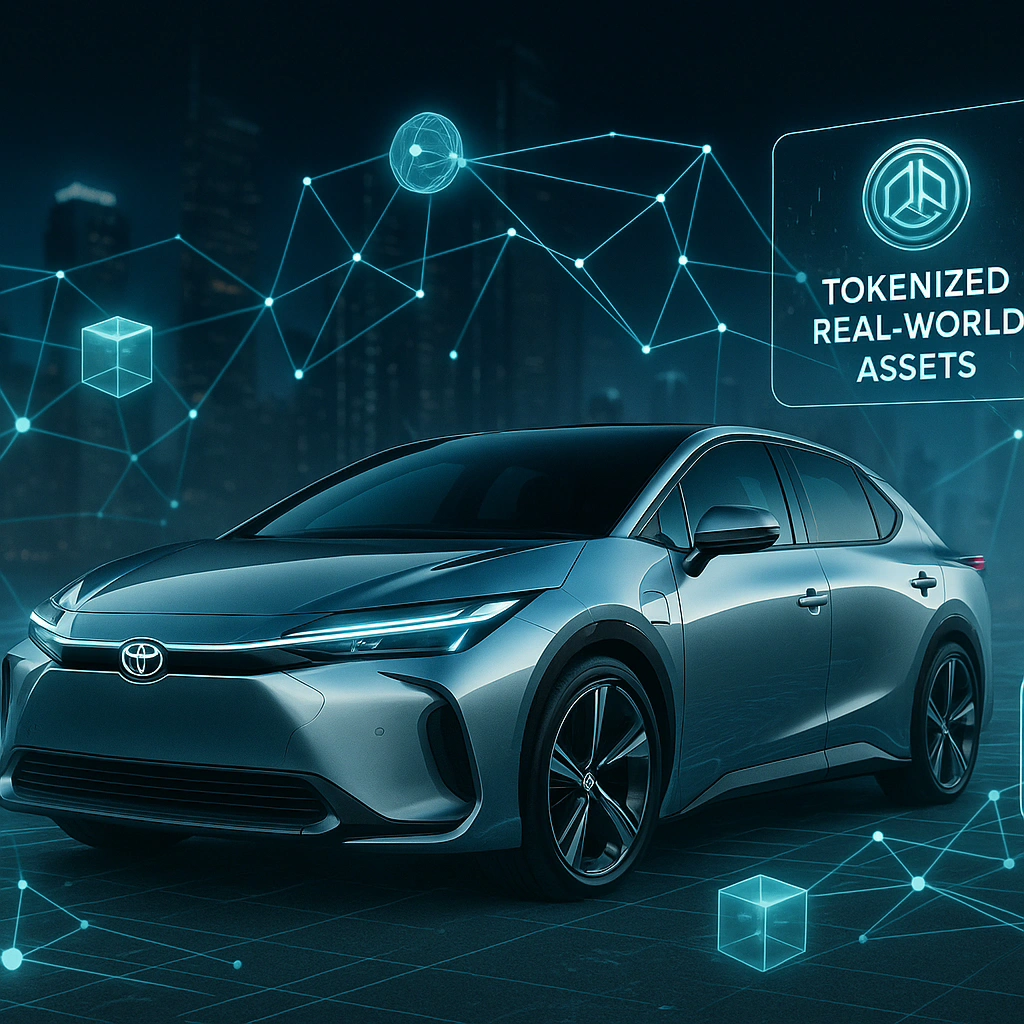
Toyota is making a significant move into blockchain and digital assets. The company is looking into how cars can be changed into tradable real-world assets (RWAs).
A New Vision for Car Ownership
On August 19, the Toyota Blockchain Lab released its white paper on the Mobility Orchestration Network (MON), a blockchain-based system designed to record and secure important information related to vehicles.
The initiative suggests that every vehicle, from private cars and rental fleets to robo-taxis and logistics trucks, could have its data stored on-chain. This would include details like registration, manufacturing history, ownership transfers, and maintenance records, all combined into a digital proof of authenticity.
NFTs as Digital Vehicle Passports
Toyota’s concept proposes that every car could be represented as a unique NFT (Non-Fungible Token). This NFT would act as a “digital passport” for the vehicle and would contain its complete history.
Buyers and investors could use this token to assess a car’s value.
These NFTs could be traded separately, even without direct physical control of the vehicle.
This creates opportunities for financial products based on vehicles. For instance, multiple car NFTs could be grouped together in a portfolio or fund, allowing investors to engage in automotive and mobility markets in a new way.
Potential Use Cases
According to Toyota, the Mobility Orchestration Network could have many applications, especially in:
Electric Vehicles (EVs): enabling investment in large EV fleets.
Robo-taxis: supporting decentralized ride-hailing services.
Logistics fleets: allowing operators in emerging markets to raise funds more effectively.
By tokenizing cars, Toyota believes that fleet managers could secure funding through blockchain-based assets, potentially at lower costs than traditional bank loans.
What It Means for the Future
Typically, cars have been seen as depreciating assets, unlike real estate, which has been widely used for investment. Toyota’s approach could shift that view, making cars part of a larger investment ecosystem.
However, the white paper does not discuss how this financialization might impact everyday car buyers, pricing models, or regulations around ownership.
Still, this initiative places Toyota at the leading edge of combining mobility, finance, and blockchain. It hints at a future where cars are not just vehicles but could also serve as assets that create investment opportunities.
Get the weekly commit
New blockchain deep dives every week.
