

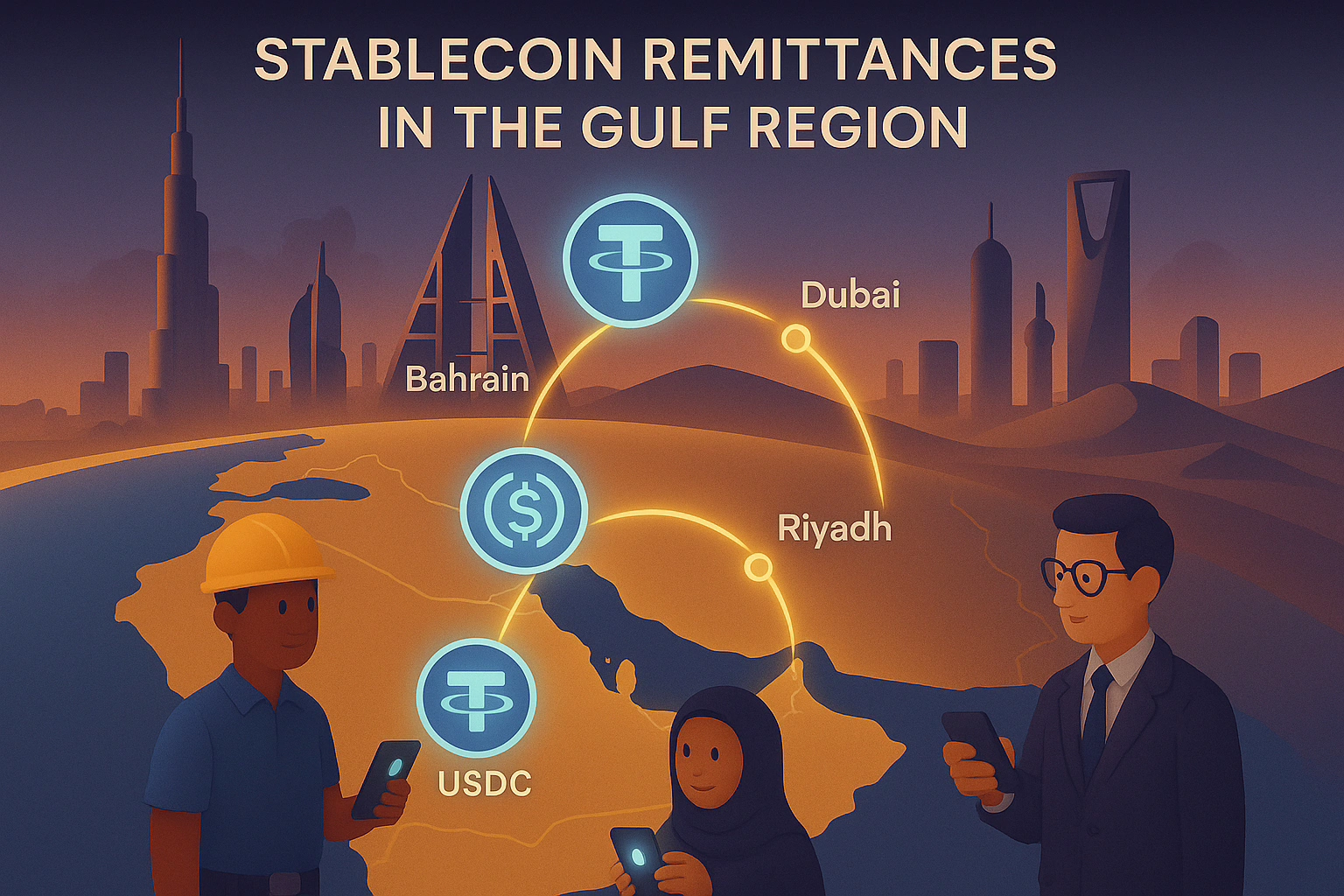
Across the Gulf, the financial world is witnessing a quiet revolution — one not led by Wall Street or big banks, but by migrant workers, small businesses, and communities who send money home every single day.
For decades, traditional remittance systems have been slow, expensive, and overly complex. Workers often pay 5–7% in fees and wait days for funds to reach their families. But now, stablecoins — digital currencies pegged to traditional money — are transforming that process, bringing speed, transparency, and accessibility to one of the world’s busiest remittance corridors.
💱 Why Stablecoins Fit the Gulf Perfectly
The Gulf Cooperation Council (GCC) region, home to millions of expatriates, recorded over $130 billion in remittances in 2023, surpassing even the U.S. as the largest source of outbound money transfers. In economies where trust, access, and cost efficiency are vital, stablecoins offer something traditional banking can’t:
- Instant cross-border transfers without intermediaries
- Lower transaction fees
- Transparent, traceable transactions
- Programmable compliance — where KYC and AML checks can be built directly into blockchain systems
Instead of relying on correspondent banks and settlement hubs, users can send value peer-to-peer, instantly and securely.
🚀 The Kem Model: From the Gulf to Asia
One of the most promising platforms leading this transformation is Kem, launched in 2023 by Kemfinity s.r.o. Founders Seth and Zane Abal, along with George Chichua, envisioned a crypto-native solution designed specifically for the remittance realities of the Global South.
By 2025, Kem expanded across the Gulf, Pakistan, and the Philippines, offering:
- Wallets for everyday transactions
- Instant local cash-outs
- Bitcoin and gold swaps for value preservation
- 3% Bitcoin cashback on purchases
- A fee-free remittance model costing less than 1% on average
Its Infinity Card bridges digital assets and real-world spending, allowing users to spend stablecoins globally — instantly and securely.
As Chichua explains, “We saw that the future of remittances couldn’t depend on legacy banks. Stablecoins make borderless money real.”
🏛️ Gulf Nations Lead with Progressive Crypto Regulation
Regulators in the Gulf aren’t just watching from the sidelines — they’re shaping the industry.
- UAE’s VARA (Virtual Assets Regulatory Authority) has built a transparent legal framework, turning Dubai into a magnet for global crypto innovation.
- Bahrain’s Central Bank (CBB) introduced the region’s first stablecoin licensing regime, requiring 1:1 fiat reserves and transparent audits.
- Saudi Arabia explores CBDC pilots under Project Aber and mBridge.
- Oman and Qatar are gradually opening up to tokenization and virtual asset providers.
Kem is aligning with these shifts, collaborating with Bahrain’s Economic Development Board to secure a local stablecoin license — making it one of the first movers in the region’s regulated Web3 ecosystem.
⚙️ From Use Case to Core Infrastructure
For decades, remittances flowed through middlemen — banks, brokers, and cash agents. Today, blockchain allows users themselves to become active participants in the financial network.
Stablecoin-driven remittance apps like Kem are redefining access:
- Speed: Transfers happen in seconds.
- Cost: Sending $200 costs under $2.
- Transparency: Every movement is verifiable on-chain.
- Empowerment: Users control their money directly — no intermediaries.
As co-founder Seth Abal puts it, “Stablecoins and Bitcoin aren’t just technologies — they’re symbols of financial freedom.”
🌐 The Future of Money Movement
Stablecoin adoption in the Gulf isn’t about speculation or hype — it’s about solving real problems. As governments provide clarity and startups innovate on permissionless rails, the remittance ecosystem is becoming faster, fairer, and more inclusive.
In a region that sends more money home than any other on Earth, stablecoins may be the bridge that finally connects financial efficiency with financial freedom.
Get the weekly commit
New blockchain deep dives every week.

