

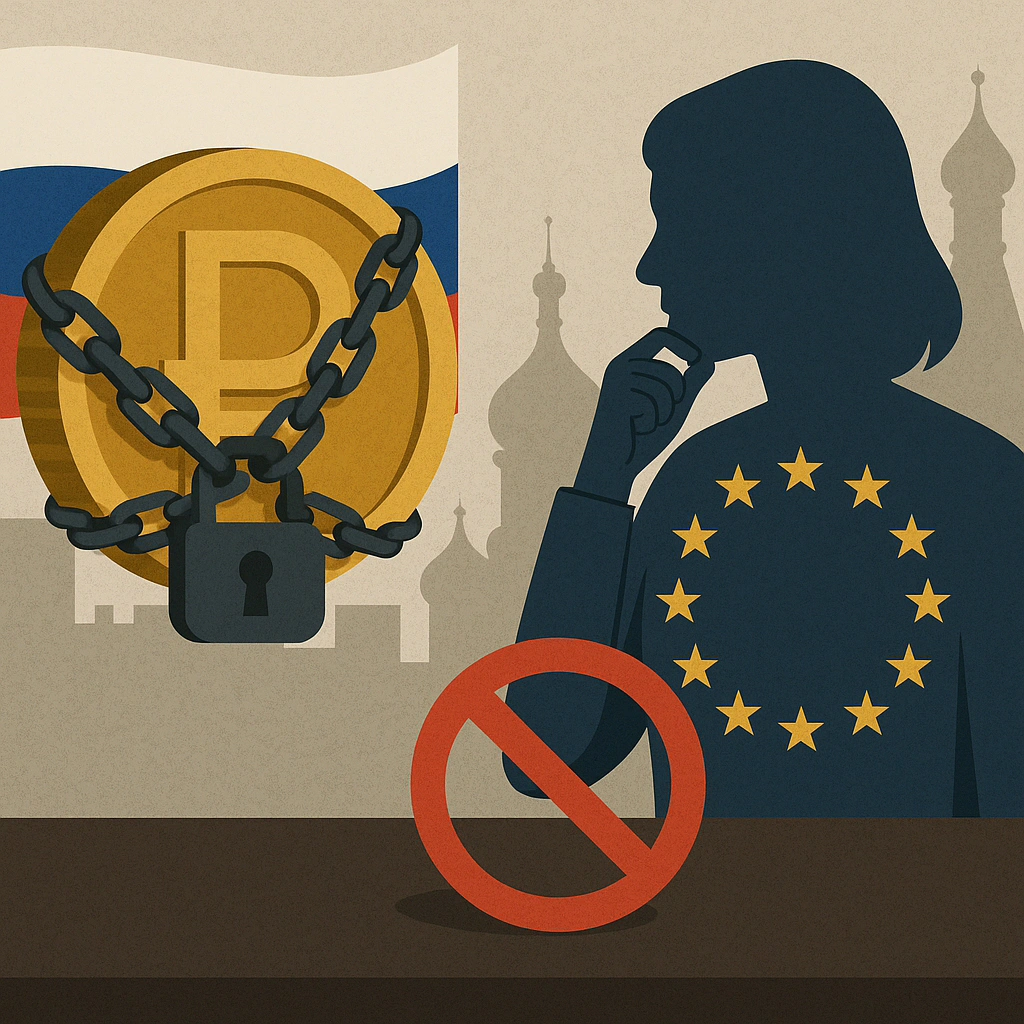
The European Union (EU) is reportedly reviewing a proposal to impose sanctions on A7A5, a stablecoin pegged to the Russian ruble that has emerged as the largest non-USD-backed digital currency in circulation.
According to Bloomberg, the planned restrictions would ban individuals and companies within the EU from engaging in any form of transactions — direct or indirect — involving A7A5.
In addition to the stablecoin itself, several banks based in Russia, Belarus, and Central Asia are also being scrutinized for allegedly facilitating crypto transactions for already-sanctioned entities.
This move would add to the EU’s broader campaign to curb Russia’s access to digital assets as a means of evading Western financial restrictions. It follows September 19 measures that blocked Russian users from transacting on EU-regulated crypto platforms and limited cross-border dealings with certain financial institutions.
Russia’s Broader Sanctions-Evasion Tactics
Digital currencies are only one of several tools Russia is believed to be using to sidestep restrictions. Reports from Integrity Risk International highlight Moscow’s growing reliance on a “shadow fleet” — hundreds of ships involved in disguising oil trade routes and smuggling sanctioned goods.
A separate Rand Corporation study also noted that Russia has used covert gold trades and intermediary trading channels to move money internationally.
Market Impact: A7A5’s Sudden Growth
Interestingly, after the EU announced its crypto-related sanctions in mid-September, A7A5’s market capitalization soared by over 250% in just one week — jumping from roughly $140 million to more than $490 million by September 26, according to data from CoinMarketCap.
As of this week, A7A5 maintains a market cap close to $500 million, accounting for about 43% of all non-USD-denominated stablecoins. The next largest competitor, Circle’s EURC, currently stands at around $255 million.
Sanctions Still Await Approval
Any new EU sanctions must be unanimously approved by all 27 member nations, and the proposal remains subject to revision before final adoption. The European Council describes sanctions as a diplomatic instrument aimed at influencing the behavior of those responsible for policies that challenge EU interests or values.
A Global Effort
The EU’s move mirrors similar actions by the United States and the United Kingdom, which in August sanctioned financial institutions and platforms allegedly supporting Russia’s crypto operations — including the Capital Bank of Central Asia and its director Kantemir Chalbayev, as well as Kyrgyz crypto exchanges Grinex and Meer.
Origins of A7A5
Launched in February 2024 on the Ethereum and Tron blockchains, A7A5 was introduced by Moldovan financier Ilan Shor in partnership with Promsvyazbank, a Russian state-owned lender. The project claims its stablecoin is “backed by diversified fiat reserves held in banks across Kyrgyzstan.”
Despite facing sanctions and a ban in Singapore, A7A5 representatives appeared at Token2049, a major crypto conference, where executive Oleg Ogienko gave a presentation before organizers later removed the project from the event lineup.
Get the weekly commit
New blockchain deep dives every week.
