

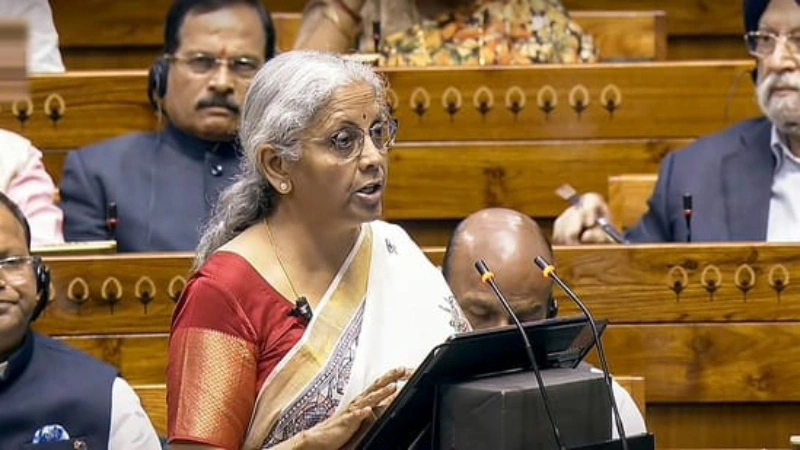
India’s Finance Minister Nirmala Sitharaman has emphasized the need for global cooperation before moving forward with any cryptocurrency legislation, effectively placing the prospect of an Indian crypto law on hold for now.
Responding to a query raised in the Lok Sabha, the Minister clarified that cryptocurrencies, by nature, transcend borders, and any attempt at unilateral regulation or prohibition would be insufficient without coordinated international efforts.
“Given the borderless characteristics of crypto assets, isolated legislation could lead to regulatory arbitrage,” Sitharaman noted in a written response. She emphasized the necessity for a shared international framework, including standardized terminology and risk evaluation protocols, before any meaningful national regulation or ban could be implemented.
The Reserve Bank of India (RBI), meanwhile, has reiterated its strong opposition to virtual currencies, citing the threat they pose to India’s monetary and fiscal stability. The central bank maintains that cryptocurrencies derive value primarily from speculative investment, lacking the intrinsic backing that fiat currencies possess through sovereign guarantees and monetary policy controls.
“The RBI has expressed the view that crypto assets should be completely prohibited,” Sitharaman conveyed to Parliament. She highlighted that the RBI has raised concerns since 2013 and took a strong stance in 2018 by directing financial institutions to avoid crypto dealings — a directive later struck down by the Supreme Court in 2020.
While the RBI continues to push for legislative action, the Finance Ministry appears to be treading cautiously. Since May 2021, financial institutions have been instructed to follow robust KYC and AML norms for crypto-related transactions, keeping national security and financial integrity in focus.
With India’s long-anticipated cryptocurrency bill still missing from recent parliamentary sessions, this latest development suggests that regulatory clarity depends on a broader international agreement — something that may take years to materialize.
Get the weekly commit
New blockchain deep dives every week.
