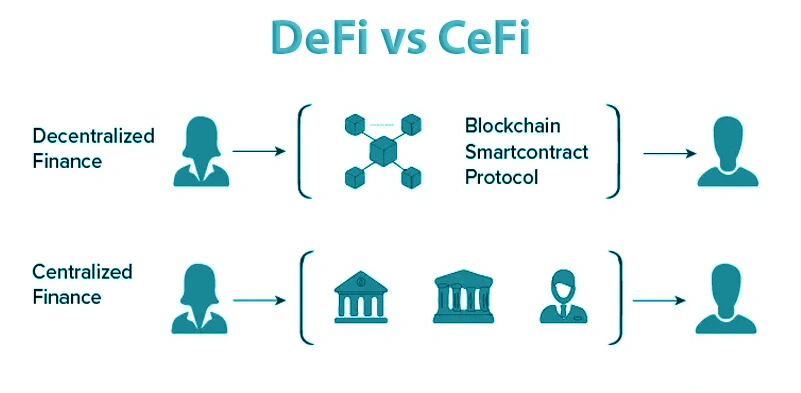

The terms Decentralized Finance (DeFi) and Centralized Finance (CeFi) refer to two different paradigms in the financial industry. While CeFi functions under conventional centralized systems, DeFi utilizes blockchain technology to offer open and decentralized financial services. We will examine the essential characteristics, benefits, and drawbacks of DeFi and CeFi in this post as we compare and contrast them. Readers may learn more about the changing financial services industry by comprehending these contrasts.
What Is CeFi (Centralized Finance)?
CeFi, or centralized finance, refers to the practice of giving your money to centralized businesses, such as cryptocurrency trading platforms, to store and administer.
To comply with the regulations of the various jurisdictions, the majority of CeFi service providers have a Know Your Customer (KYC) and Anti Money Laundering (AML) policy in place. It implies that you must provide them access to your personal data and guarantee that your money is not being used for illegal activities or originating from sources that are.
Although CeFi’s crypto platforms relieve you of the stress of managing your crypto assets, they offer a number of disadvantages, including denying you power, stability, and control over your crypto assets.
Features of CeFi (Centralized Finance)
Seamless customer service: To manage the money of its users, each Centralized Exchange has an internal account. Large CeFi firms also protect user data and aid clients with a specialized customer support team, improving the trust level.
Flexible exchange: CeFi simplifies the conversion of fiat money into cryptocurrencies. The platform’s ease of use leads to greater client onboarding; Coinbase, with more than 89 million members globally, is one example.
Interoperability: CeFi makes it simple to send payments using funds that are being held in the custody of numerous chains while also facilitating lending, trading, and borrowing.
Cross-chain swap services: Trading cryptocurrencies on the basis of independent blockchain platforms is made possible by centralized finance. DeFi struggles with cross-chain swaps because they are difficult and time-consuming, whereas CeFi secures asset custody from many chains.
Centralized Exchange (CEX): With the help of the centralized exchange, you may manage your portfolio through a private account and save money on blockchain transaction costs. Additionally, because the funds are on the exchange, you don’t need to worry about the management part of it.