

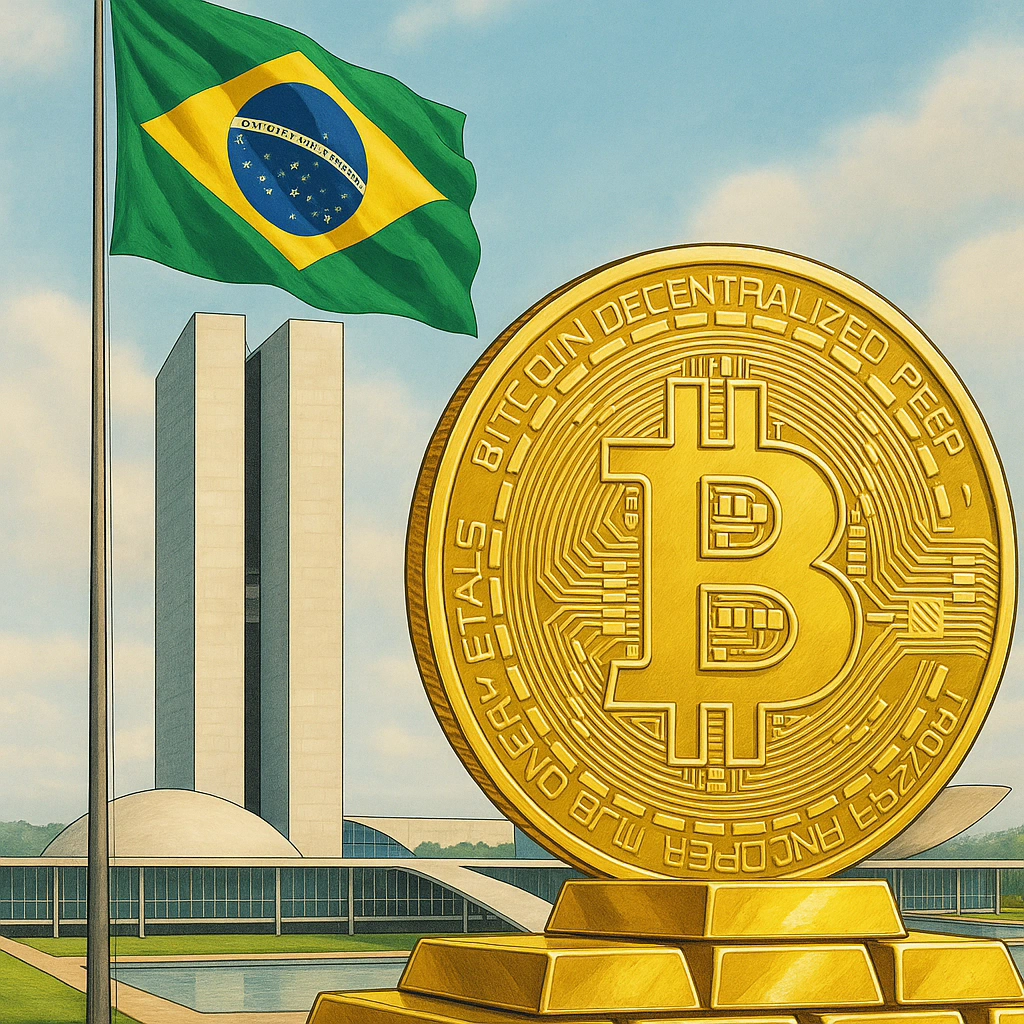
Brazil may be on track to become one of the first major economies to officially include bitcoin in its international reserves. A bill currently under discussion in the country’s Chamber of Deputies suggests allocating up to 5% of Brazil’s foreign reserve holdings, valued at around $344 billion, into bitcoin.
A Push for Diversification
The legislation, introduced by Deputy Eros Biondini, aims to diversify Brazil’s financial safety net and establish the nation as a leader in digital innovation. Inspired by similar efforts abroad, the proposal also includes strict security measures such as storing assets in cold wallets and requiring semiannual progress reports to Congress.
Biondini described the initiative as a chance to enhance economic independence and ensure Brazil keeps up with global innovators. He noted, “We’ve often been late adopters in global trends. This time, Brazil has the opportunity to move ahead.”
Early Reception in Congress
The bill has already moved to committee review, where technical adjustments will be made before it can be considered for a full chamber vote. Members of the Economic Development Committee showed strong interest. Deputy Luiz Philippe de Orléans e Bragança remarked that bitcoin is no longer experimental but increasingly mainstream: “Large institutions, banks, and sovereign wealth funds are already adopting bitcoin. Brazil should not fall behind.”
Pedro Henrique Guerra, chief of staff to Vice President Geraldo Alckmin, agreed, suggesting that bitcoin could act as a modern, digital form of gold. He also mentioned that it could support long-term initiatives like education and infrastructure through bitcoin-backed bonds and investment funds.
Government’s Cautious Stance
Despite rising enthusiasm, Brazil’s Ministry of Finance and Central Bank raised concerns. Their worries were not ideological but focused on bitcoin’s volatility.
Daniel Leal, representing the Ministry of Finance, stressed that while bitcoin has value, it does not currently meet the main goal of reserves, which is to provide financial stability during crises. Luis Guilherme Siciliano of the Central Bank pointed out that reserves usually rely on low-risk, low-volatility assets: “In times of geopolitical stress or financial turmoil, reserve assets must act as stabilizers. Bitcoin’s volatility makes it unsuitable for this role.”
