

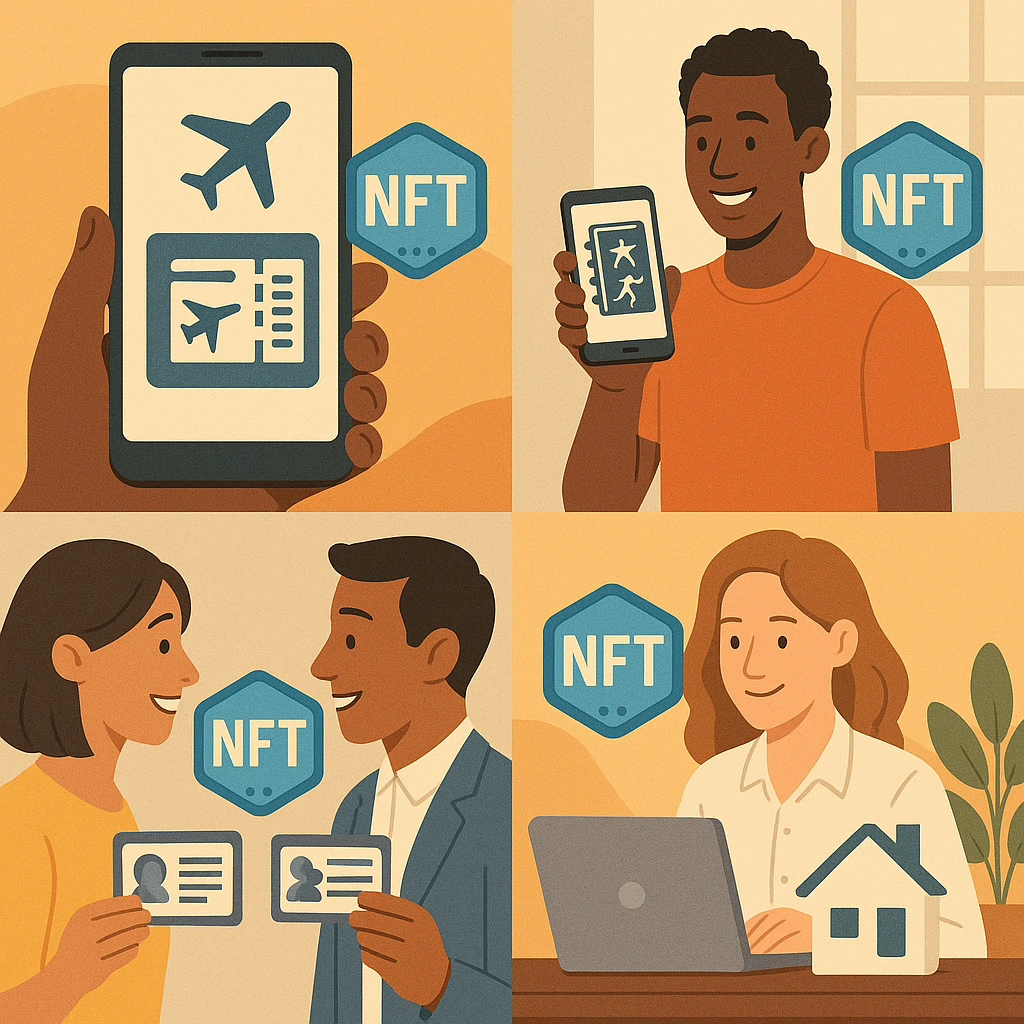
Non-fungible tokens (NFTs) have become widely recognized for digital art sales, but their true potential extends far beyond collectibles. At their core, NFTs are blockchain-based certificates of ownership. This technology makes it possible to tokenize nearly any asset—physical or digital—while providing transparency, security, and traceability.
Here are eight innovative applications of NFTs that show how they could reshape industries in the near future.
1. Digital Collectibles and Gaming Assets
NFTs first gained popularity by representing unique digital items such as profile pictures, avatars, or in-game assets. Artists and creators can mint tokens tied to their works, turning them into verifiable collectibles.
Examples include:
- Artwork and digital comics
- Music and video clips
- Virtual trading cards
- Gaming avatars, weapons, and accessories
- Virtual real estate or pets
Marketplaces like OpenSea and Rarible make these assets tradable, while projects such as CryptoPunks, Bored Ape Yacht Club, and CryptoKitties remain iconic examples.
2. Tokenized Fine Art
NFTs can also link to physical artworks. By embedding details such as the artist’s identity, provenance, and ownership records into a blockchain-based smart contract, NFTs create a digital certificate of authenticity.
Fractionalization adds another layer: expensive art pieces can be split into smaller NFT shares, allowing multiple investors to own part of a single painting. Platforms like Masterworks and Maecenas already experiment with this approach, opening fine art markets to broader audiences.
3. Real Estate Transactions
Imagine buying a house where ownership is transferred instantly through a blockchain record. By tokenizing property titles, NFTs can simplify buying, selling, and transferring ownership.
Projects like Propy are working toward decentralized title registries that could eventually streamline property deals while ensuring transparent records of ownership.
4. Fractional Ownership of Real Assets
Just as art can be split into fractional NFTs, so can high-value physical assets such as luxury real estate, private jets, or yachts. This makes investing more accessible and diversifies portfolios without requiring full ownership of costly items.
Companies like RealT (real estate) and Salient Yachts (yachts) are examples of early adopters applying NFT-based fractional ownership.
5. Vehicle Ownership
NFTs could one day replace paper titles for vehicles. By linking an NFT to a specific car, ownership can be securely and transparently transferred without physical documents.
While regulations still pose challenges, companies like CarForCoin have begun experimenting by issuing NFTs tied to luxury cars alongside traditional titles.
6. Insurance on the Blockchain
Insurance policies can be tokenized into NFTs, embedding all terms and conditions into a transparent blockchain record. This could make claims faster and reduce fraud while opening opportunities for decentralized insurance markets.
Platforms like Etherisc already offer blockchain-based policies for risks like flight delays, natural disasters, and crop damage. However, widespread adoption still depends on regulatory evolution.
7. Borrowing and Lending with NFTs
NFTs don’t just represent ownership—they can also serve as collateral. For instance, a homeowner could tokenize a mortgage, or a collector could borrow money using an NFT artwork as security.
Projects such as Brightvine, NFTfi, and Pine.loans are actively building platforms where loans and debt agreements are linked to NFTs, making borrowing more flexible.
8. Loyalty and Rewards Programs
Businesses can issue NFTs as exclusive rewards to strengthen customer engagement. These tokens might unlock unique privileges, grant access to special events, or provide ownership of limited-edition digital items.
Big brands are already testing the concept:
- Nike patented “Cryptokicks,” combining NFTs with sneakers.
- Taco Bell released NFT collectibles tied to promotions.
- Platforms like Venly help small businesses create tailored NFT-based loyalty programs.
Final Thoughts
NFTs go far beyond profile pictures and pixel art. From real estate to insurance, from gaming to luxury assets, they represent a new way of proving ownership, unlocking value, and building digital economies.
That said, NFTs are still a young and experimental technology. Risks remain high, and regulation continues to evolve. For anyone exploring NFTs—whether as a collector, investor, or entrepreneur—doing your own research is essential.
Get the weekly commit
New blockchain deep dives every week.
