

An NFT, or non-fungible token, is a digital asset representing ownership of a unique item or piece of content, such as artwork, an audio file, a video clip, or a post. Unlike fungible tokens such as cryptocurrencies, which can be multiple with the same value, each NFT is unique and can’t be exchanged for another NFT on a one-to-one basis.
NFTs are created using blockchain technology, allowing their ownership and authenticity to be verified through a decentralized ledger. This makes it possible to create a one-of-a-kind digital asset with a verifiable history of ownership.
Using blockchain technology, Minting an NFT creates a unique and indivisible digital asset. When someone mints an NFT, they create a new, unique digital asset verified and secured by a blockchain network.
To mint an NFT, the creator typically needs to follow steps that involve selecting a platform, creating the digital asset, choosing a file format, setting a price, and minting the NFT. Once the NFT is minted, it is assigned a unique identifier that distinguishes it from any other tokens on the blockchain.
Process of minting an NFT
Minting an NFT involves creating a unique digital asset and registering ownership of that asset on a blockchain network. Here is a general overview of the process:
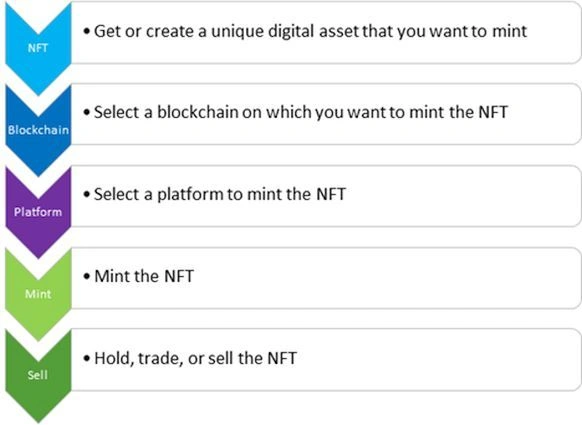
Process of minting an NFT
1. Create or obtain your digital asset:
The first step is creating or obtaining a unique digital asset you want to represent as an NFT. This could be a piece of artwork, a video clip, a music file, or any other type of digital content that you own the rights to.
Some artists create a collection of digital assets with some utility. For example, you could create a collection of 1,000 NFTs that represent an exclusive membership of an online club.
2. Choose a blockchain platform:
The next step is to choose a blockchain platform that supports the creation and storage of NFTs. The most popular blockchain platform for creating NFTs is currently Ethereum, but other blockchains also support NFTs, such as Binance Smart Chain, Flow, Solana, Polygon, Algorand, Stratis, and Near.
The selection of a blockchain platform depends on your needs and experience. For example, if you are experienced with the Near protocol, you may want to choose the Near protocol as your blockchain.
