

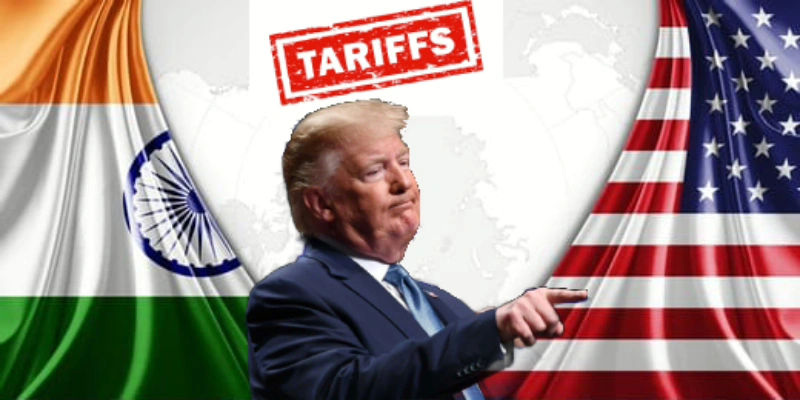
Washington DC, July 31: In a bold move that could reshape global trade dynamics , US President Donald Trump has declared that India will face a 25 percent tariff on its exports to the United States starting August 1. The announcement, made via his post on Truth Social, also includes an additional penalty aimed at India’s ongoing oil and defense ties with Russia, a country currently embroiled in the war in Ukraine.
Although Trump described India as a friend, he criticized what he called years of unequal trade and restrictive non-monetary trade barriers, which he described as among the worst in the world. He emphasized that the US trade deficit with India remains a significant issue.
India has some of the highest tariffs globally, and their continued military purchases from Russia along with large-scale energy imports are unacceptable during this time of global conflict,” Trump wrote. “India will therefore be paying a tariff of 25 percent, plus penalties for the above.”
This declaration follows recent warnings by US Senator Lindsey Graham, who had hinted that Trump would take strong action against nations continuing to engage economically with Russia. Graham identified India, China, and Brazil as major buyers of discounted Russian oil, accusing them of indirectly supporting the Kremlin’s war machinery.
In line with this sentiment, NATO leaders, including Mark Rutte, have also issued strong messages to countries maintaining trade ties with Moscow, with potential sanctions and 100 percent tariffs on the table.
India Responds with Caution
India has not yet officially responded to this latest announcement. However, earlier this month, Commerce Minister Piyush Goyal made it clear that India will not rush into trade agreements under pressure. He reaffirmed that any potential deal with the United States would only be accepted if it aligns with India’s national interests and is concluded on fair terms.
A Trade Deal Still Hanging in Balance
Talks between the two countries had picked up momentum over the past few weeks, especially with the Liberation Day Tariff Proclamations that had temporarily placed India on a 90-day grace period. Initially, Trump had proposed a 26 percent duty, but with mounting international criticism, he deferred the tariff to give countries time to negotiate.
That grace period, originally set to expire on July 9, was extended until August 1 as India made a final push to strike a deal. With no agreement announced yet, Trump’s decision could further complicate the already delicate trade relationship.
