

The Semantic Web and Web 3.0 are related concepts that aim to enhance the capabilities of the World Wide Web by making information more accessible, interconnected, and meaningful for both humans and machines. While there isn’t a strict consensus on the exact definitions, here’s an overview of both concepts:
Web 3.0 Is A Successor Of Web 2.0 And Web 1.0.
The third generation of the internet will be Web 3.0.
Web 1.0
Tim Berners-Lee established the World Wide Web, or Web 1.0, in 1989, and it is considered the mother of the current Internet. Web 1.0 is a static web with few people interacting and no search engines. Web 1.0 content is read-only, similar to Wikipedia sites without the ability to comment. HTML, URL, and HTTP technologies are used to access information on websites. Web 1.0 may be described as a one-way street with minimal information.
Web 2.0
Web 1.0 developed into Web 2.0 in 2005, a phrase coined by Tim O’Reilly in 2004. Web 2.0, also known as read-write and social web, is characterized by increased user engagement. Web 2.0 allows users to not only receive material but also produce and distribute it by utilizing technologies such as JavaScript, HTML5, and CSS3.
The majority of the material on Web 2.0 is held by global digital behemoths such as Meta (Facebook), Google, and Twitter. In contrast to Web 1.0, data in Web 2.0 may be transferred between other sites, allowing user-generated content to spread.
Web 3.0
Web 3.0, the third generation of the web, is yet to arrive. We now need a precise definition of Web 3.0. Web 3.0 is built on artificial intelligence (AI), machine learning, and blockchain technology.
Web 3.0, also known as semantic web, provides information in a more human-like manner by utilizing AI and machine learning technology. Blockchain technology is being used in Web 3.0 to provide the utmost privacy. In blockchain technology, information is kept in the form of blocks that are dispersed across several computers, allowing users to own data in addition to utilizing it.
The difference between Web 2.0 and Web 1.0 is evident. Web 2.0 refers to user engagement with apps such as Facebook (META), Twitter, and YouTube. The web, on the other hand, was a read-only, restricted-access web. However, the distinction between Web 2.0 and Web 3.0 is not evident because Web 3.0 is still in the works.
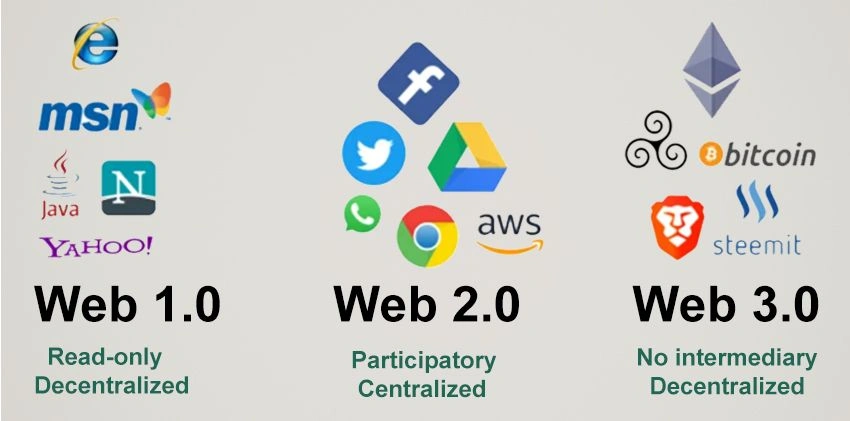
Web 1.0, Web 2.0, And Web 3.0
The main features of Web 3.0
To comprehend Web 3.0, we must first grasp its features:
- Semantic Web
- Artificial intelligence (AI)
- Ubiquity
- Blockchain technology
- 3D world
Semantic Web
The Semantic Web is an extension of the World Wide Web designed to enable machines to understand and interpret the meaning of information. It involves structuring data in a way that adds context and relationships, allowing for more intelligent search, data integration, and automated decision-making. This is achieved through the use of standardized ontologies, metadata, and linked data principles. By creating a web of interconnected and semantically enriched data, the Semantic Web aims to bridge the gap between human and machine understanding, enabling more sophisticated information retrieval and knowledge discovery across diverse domains.
Berners-Lee referred to Web 3.0 as the semantic web. Understanding the meanings and feelings of a word is referred to as semantics. As an example,
- I love coffee.
- I ❤ coffee.
These two phrases look distinct yet have the same meaning. Web 3.0 will enable computers to collect data from all sites and present it to consumers in a more humanistic manner.
Artificial Intelligence (AI)
Web 3.0 will make extensive use of artificial intelligence. Although Web 2.0 employs AI, the majority of it is human-based and vulnerable to manipulation and incorrect information. A corporation selling its goods on many internet platforms, for example, can alter its ranking by paying individuals to rate it.
Following the Gamespot trading event, Google’s AI system removed around 100,000 negative ratings of the Robinhood app from the Play Store after identifying rating manipulation operations intended to purposely downvote the app.
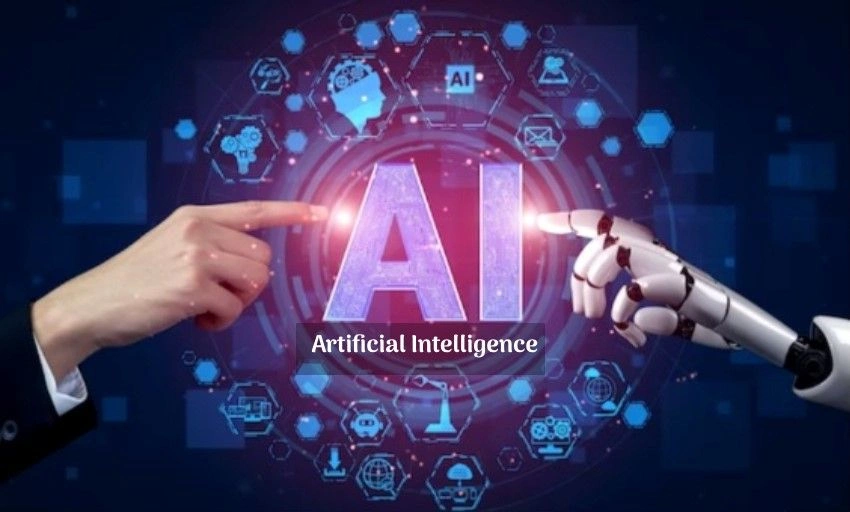
Artificial Intelligence (AI)
In this way, web 3.0 will leverage AI and machine learning to present users with the most personalized and impartial results.
Ubiquity
Internet access and presence in every part of the globe will put everything on the Internet. Web 2.0 is also common due to social networks, although it is dependent on whether or not you have an internet connection.
Web 3.0 is getting closer. Smartphones and laptops will no longer be the only internet concerns as IoT (the Internet of Things) evolves.
Blockchain Technology
Blockchain Web 3.0 uses blockchain technology to make user data more secure and private. Blockchains will decentralize data and prevent internet behemoths from exploiting personal information.
Blockchain technology is transforming the internet as a whole, with:
- Nfts
- dApps (decentralized apps)
- Crypto
- DeFi (decentralized finance)
- 3D World
3D World
Web 3.0, according to current minds, would blur the gap between the physical and virtual worlds by modernizing 3D graphics. The third-generation web will build a 3D world that will improve not just gaming but also health, e-commerce, and other areas of life.
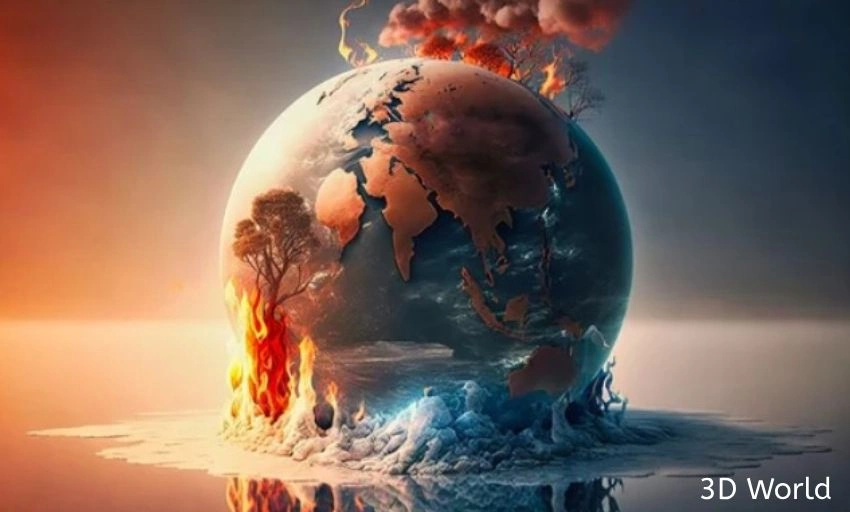
3D World
Life with Web 3.0
These five characteristics will soon characterize Web 3.0. Semantics and AI will improve the browsing experience. Consider an example of how Web 3.0 may be implemented.
You want to wash your car and enjoy some Chinese food at the same time. When you ask your vehicle assistant for a car wash and Chinese cuisine, it will offer you the location of the car wash service as well as the finest Chinese food restaurant with its 3D menu on your display, based on a comparison of hundreds of evaluations from various sources.
In Web 3.0, many commonly used offline devices including refrigerators, ovens, and transportation equipment will operate as dApps (decentralized apps), integrating the internet exponentially more into daily life.
Conclusion
The Semantic Web and Web 3.0 represent the next evolutionary steps in the development of the Internet, focusing on enhancing data interoperability, machine understanding, and user experiences. The Semantic Web aims to create a web of interconnected data, where information is not only accessible to humans but also interpretable by machines, leading to more intelligent search, automation, and personalized services. Web 3.0 builds on this concept by incorporating decentralized technologies, such as blockchain and distributed ledgers, to establish a user-centric and trust-enhanced internet ecosystem. This fosters greater control over personal data, improved privacy, and the potential for decentralized applications that disrupt traditional centralized models.
FAQs
Q. What are the key technologies of the Semantic Web?
A. Key technologies include RDF (Resource Description Framework), OWL (Web Ontology Language), and SPARQL (query language for RDF data), which enable data to be linked, shared, and queried across the web.
Q. How does the Semantic Web improve search and data analysis?
A. The Semantic Web enables better search accuracy by understanding the context, relationships, and semantics of data. It also facilitates automated data integration and analysis.
Q. How does Web 3.0 differ from Web 2.0?
A. Web 2.0 focused on user-generated content and social interactions, while Web 3.0 emphasizes data ownership, decentralization, and the ability to interact with applications without intermediaries.
Q. What role does blockchain play in Web 3.0?
A. Blockchain enhances Web 3.0 by providing a secure and transparent ledger for transactions, enabling decentralized applications (dApps), and empowering users to have ownership and control over their data.
Q. How does Web 3.0 impact privacy and data control?
A. Web 3.0’s decentralized approach allows users to control their personal data, granting or denying access to various applications without relying on centralized platforms.
Get the weekly commit
New blockchain deep dives every week.
