

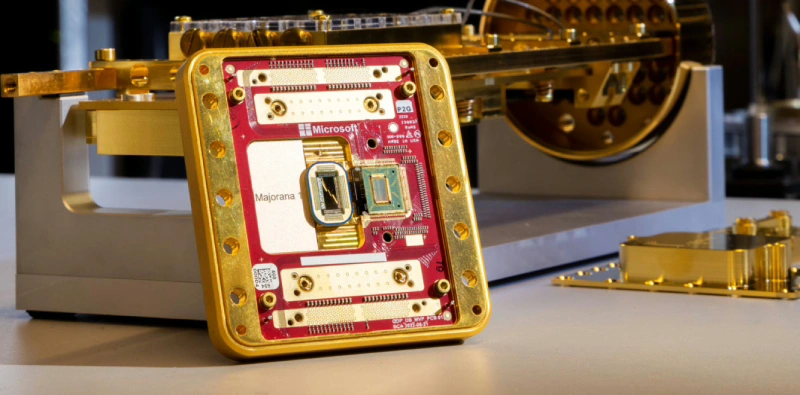
River, a Bitcoin infrastructure provider, has announced a significant advancement in Bitcoin’s quantum resistance thanks to a new chip developed by Microsoft. This chip significantly shortens the timeline for implementing quantum-resistant cryptography in Bitcoin, potentially safeguarding the network against future quantum computing threats.
https://twitter.com/River/status/1892619297853169686
The current cryptographic algorithms used by Bitcoin, while secure against classical computers, are vulnerable to attacks from powerful quantum computers. The development of sufficiently advanced quantum computers could theoretically compromise Bitcoin’s security by breaking these cryptographic algorithms. This has spurred research into quantum-resistant cryptography for Bitcoin.
The challenge has been the computational intensity of implementing these new cryptographic algorithms. Previously, the transition to quantum-resistant cryptography was projected to be a long and complex process. However, Microsoft’s new chip dramatically reduces the computational burden, making it feasible to implement these changes much sooner.
This breakthrough is a major step forward for Bitcoin’s long-term security. While a practical, large-scale quantum computer capable of breaking Bitcoin’s cryptography is not yet a reality, proactive measures are essential to ensure the network’s resilience. River’s announcement, enabled by Microsoft’s technology, suggests that Bitcoin can adapt to the potential threat of quantum computing more quickly than previously anticipated.
This is a positive development for the Bitcoin ecosystem and reinforces its position as a secure and decentralized digital currency. It demonstrates the ongoing innovation and adaptability within the Bitcoin community to address potential future challenges.
Get the weekly commit
New blockchain deep dives every week.
