
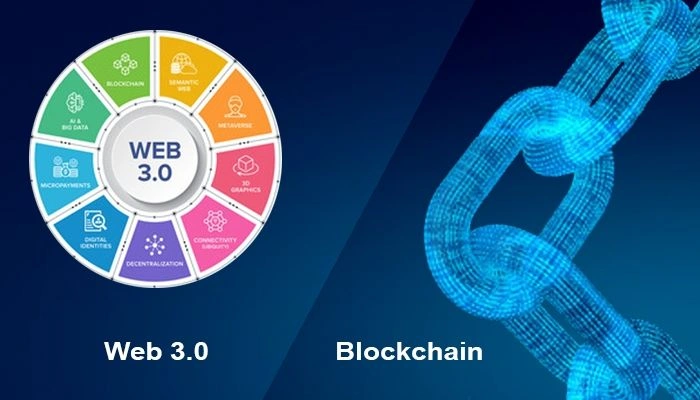
The terms “Web3” and “blockchain” are frequently used interchangeably, but in the world of decentralized technology, they represent distinct concepts. This article aims to provide a comprehensive overview of the distinctions between Web3 and blockchain, emphasizing their distinct characteristics, functionalities, and potential impact on various industries.
What is Web 3.0?
Web 3.0
Web 3.0, also known as the decentralized web or the semantic web, is the next generation of the internet that aims to change how we interact, share information, and transact online. It is a step forward from the current Web 2.0 model, which is heavily centralized and controlled by a few dominant companies.
The integration of several emerging technologies, such as blockchain, decentralized networks, artificial intelligence, and machine learning, characterizes Web 3.0. These technologies complement one another to provide a more decentralized, open, and user-centric internet experience.
What Is Web3
Here are some key features of Web 3.0:
Decentralization: Instead of relying on central authorities, Web 3.0 emphasizes decentralization by distributing control and data ownership among multiple participants. Blockchain technology is critical for decentralized applications, secure transactions, and trustless interactions.
Interoperability: Web 3.0 seeks to promote interoperability among various platforms, applications, and data sources. This enables seamless data exchange and communication across multiple decentralized systems, resulting in a more connected and efficient web.
Improved Privacy and Security: Web 3.0 places a premium on user privacy and data security. Individuals have more control over their personal information with decentralized technologies because they can choose which data to share and with whom. Encryption and cryptographic protocols protect sensitive data and ensure secure communication.
Intelligent Automation: Artificial intelligence and machine learning algorithms are integrated into Web 3.0 to provide intelligent automation and personalized experiences. These technologies enable smart recommendations, predictive analysis, and automated decision-making based on user preferences and historical data.