

Background
In recent years, the cryptocurrency landscape has undergone seismic shifts, with innovations reaching unprecedented heights. Yet, a consistent obstacle, namely scalability, has stubbornly resisted satisfactory resolution. Slow transaction speeds, network congestion, and high transaction fees continue to limit the wider adoption of cryptocurrencies. However, there’s an air of transformation in the crypto sphere, heralded by emergent layer 2 solutions like Arbitrum.
Arbitrum is an innovative project by Offchain Labs, a startup co-founded in 2018 by Ed Felten, along with his students Steven Goldfeder and Harry Kalodner. Offchain Labs has focused on enhancing the Ethereum network’s capabilities by addressing its inherent limitations, primarily those related to scalability and transaction fees. Their solution, Arbitrum, launched its mainnet to developers in May 2021, and since then, it has attracted significant attention and has been quickly adopted due to its remarkable features. By resolving scalability issues, Arbitrum stands ready to alter the cryptocurrency landscape fundamentally. This article endeavors to probe the workings of Arbitrum and its prospective influence on the world of cryptocurrencies.
Understanding Arbitrum
Layer 2
Before diving into the specifics of Arbitrum, it is crucial to understand the Ethereum Layer system and the concept of smart contracts, as these concepts form the foundation of how Arbitrum operates.
Ethereum is a public, open-source, blockchain-based platform that enables developers to build and deploy decentralized applications (DApps). While the Ethereum network has brought unprecedented possibilities, it has also been limited by issues related to scalability and congestion, primarily due to its single-chain structure, which is often referred to as Layer 1. Layer 1 comprises the base protocol (the Ethereum blockchain), and all transactions, regardless of their size or value, are processed on this layer. This system can lead to high fees and slow transactions, particularly during periods of heavy network usage.
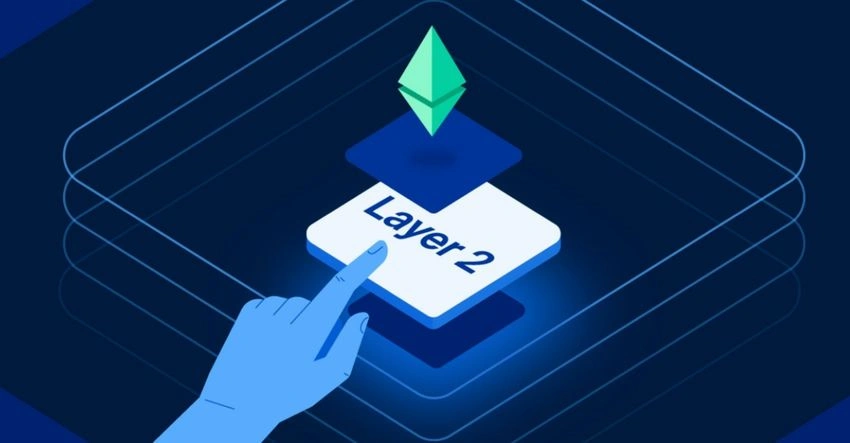
In response to these challenges, developers have proposed several Layer 2 solutions. The “Layer 2” term refers to a secondary framework or protocol that is built on top of an existing blockchain network (Layer 1). The primary purpose of Layer 2 solutions is to handle transactions off the main blockchain, increasing the overall capacity of the network and reducing fees. Layer 2 solutions inherit the security of Layer 1 while achieving greater scalability. This technology is particularly promising for scaling DApps, and the implementation of such solutions has been widely regarded as a significant development in blockchain technology.
Smart contracts are self-executing contracts with the terms of the agreement directly written into code. These digital contracts automatically execute and control the transaction, removing the need for a trusted third-party intermediary. They are stored on the blockchain, are traceable, and irreversible, and their execution is handled by the blockchain network itself. Smart contracts have revolutionized the way agreements are made in the digital world, with Ethereum introducing them to its blockchain platform.
Now, to connect the dots, Arbitrum is a Layer 2 scaling solution that is built on top of the Ethereum network. Rather than processing every transaction on the main Ethereum chain (Layer 1), Arbitrum uses its off-chain protocol to create a more scalable environment, thus reducing congestion and costs. It accomplishes this through the use of off-chain smart contract execution environments, known as rollups.
Rollups operate by running computation-intensive tasks off-chain, while still posting data to the main chain (Layer 1), ensuring the security of the Ethereum network. They bundle or ‘roll up’ many transactions into a single proof, which is then posted to the Ethereum network. This technique substantially increases the network’s capacity to process transactions, while also reducing the associated costs.
In essence, by leveraging Layer 2 technology and the power of smart contracts, Arbitrum opens up new avenues for the scalability and efficiency of Ethereum-based applications, promising to bring about a step change in the world of decentralized finance.
Enhanced Scalability and Reduced Transaction Fees

Enhanced Scalability and Reduced Transaction Fees
Among the primary advantages of Arbitrum is its capacity to both markedly boost scalability and drastically reduce transaction fees for applications grounded in Ethereum.
Scalability, in the context of blockchain technology, refers to a network’s ability to process a large number of transactions per second (TPS). The more scalable a network, the higher its throughput, meaning that it can process more transactions in less time. By shifting the majority of computational load off-chain, Arbitrum significantly lightens the burden on the Ethereum network. This leads to swifter transaction processing and heightened throughput, paving the way for the development and growth of resource-demanding applications, such as decentralized finance (DeFi) protocols and gaming platforms.
In parallel, Arbitrum also addresses a longstanding pain point in the crypto sphere – high transaction fees. These fees, which users must pay to make transactions or execute smart contracts on the Ethereum network, have historically posed a significant barrier to the broader adoption of Ethereum-based applications. They have been particularly prohibitive for smaller value transactions, where the fee can sometimes even exceed the transaction value itself.
Arbitrum tackles this issue by employing a technique known as rollups. Rollups bundle multiple transactions into a single batch, effectively spreading the cost of posting data to the Ethereum chain across numerous transactions. This batching process drastically cuts the cost per transaction, making even microtransactions economically viable. This reduction in transaction costs increases the accessibility and attractiveness of Ethereum-based applications to users, fostering a more inclusive and diverse ecosystem.
Improved User Experience
With its primary objective being to enhance the overall user experience of decentralized applications (DApps), Arbitrum aims to diminish latency and offer nearly instant transaction finality. With more rapid confirmation times and reduced fees, users are treated to a frictionless experience when interacting with various DApps hosted on the Arbitrum network. Moreover, the compatibility with Ethereum ensures that developers can smoothly deploy their existing Ethereum-based applications onto Arbitrum, requiring minimal modifications.
Impact on DeFi

Impact on DeFi
Despite the meteoric rise of decentralized finance in recent years, scalability has consistently acted as a restrictive factor. Arbitrum’s capability to deliver significantly faster transaction speeds and lower fees has the potential to unlock the full potential of DeFi. By enhancing scalability, Arbitrum facilitates the creation of increasingly complex DeFi protocols like decentralized exchanges, lending platforms, and yield farming strategies. These can operate at a vast scale without overburdening the Ethereum network.
Final Thoughts
Arbitrum is paving the way in addressing scalability and transaction efficiency issues inherent to the Ethereum network. By increasing transaction speed and reducing costs, it democratizes access to decentralized applications and widens possibilities for developers and users alike. Arbitrum’s potential impact is profound. It not only resolves technical issues but also stimulates a conducive environment for complex decentralized finance (DeFi) protocols to thrive without overburdening the Ethereum network. As more developers migrate their projects to Arbitrum, its adoption could reach critical mass, reshaping the crypto landscape. In conclusion, Arbitrum is poised to revolutionize the crypto world with its innovative implementation of Layer 2 technology and smart contracts. As the crypto community continues to embrace solutions like Arbitrum, we anticipate a more efficient, accessible, and robust decentralized financial ecosystem. Arbitrum’s journey is just beginning, but its potential impact is enormous.
Get the weekly commit
New blockchain deep dives every week.
