


US Justice Department names its first artificial intelligence officer to handle technological issues; Due to racial errors. Google suspends AI-generated person photographs; Researchers at ITMO are using AI to speed up the manufacturing of carbon nanoparticles for cancer diagnostics. We cover this and other news in our daily roundup. According to an Adobe survey, the majority of Indian consumers prefer AI to human interaction. Let’s examine this.
First AI officer appointed by US Justice Department to handle technological challenges
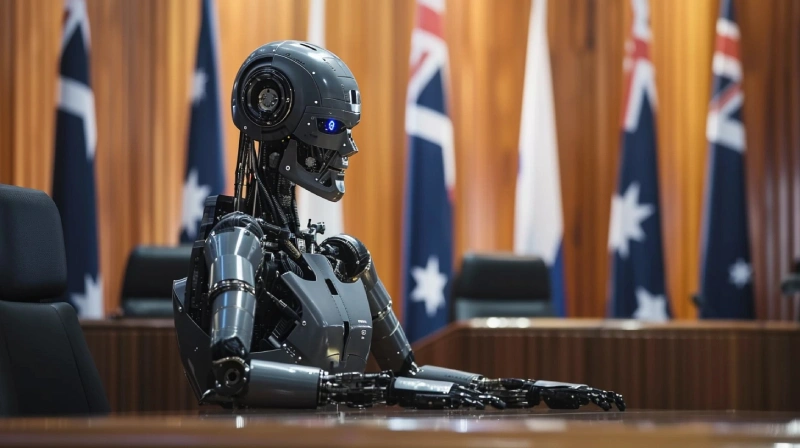
Amid the expanding obstacles faced by artificial intelligence (AI) in federal law enforcement, the U.S. Justice Department selects Princeton University’s Jonathan Mayer as its first AI officer. Mayer will oversee the ethical incorporation. Of AI into investigations and prosecutions in his capacity as top scientific and technology adviser. Citing prior use in narcotics tracing and the Capitol attack inquiry, the department seeks to simultaneously limit risks and maximize AI’s benefits with an emphasis on staying ahead of technical breakthroughs, as reported by Reuters.
Due of racial errors, Google suspends AI-generated person photos.

Google halts the creation of human images for its AI model Gemini in response to complaints about racial errors. The business is aware of the problems and intends to produce a revised version. Google’s increased emphasis on AI in the face of competition and concerns about potential bias, misinformation, and deepfakes prompted the change. Critics criticized Gemini’s portrayals of historical figures for their inaccuracy, leading to a brief suspension in response, as Bloomberg reported.
Researchers at ITMO are using AI to speed up the manufacturing of carbon nanoparticles for cancer diagnostics.

Researchers at ITMO use AI to forecast the properties of carbon nanoparticles for biomedical applications, which simplifies their manufacturing. Precursors and synthesis conditions are examples of input parameters that the machine learning algorithm uses to produce optical characteristics like absorbance and photoluminescence peaks. Scientists may create carbon nanoparticles with tailored optical properties for cancer diagnosis and treatment more quickly by automating this process, according to India EducationDiary. This is a more effective approach than the conventional trial-and-error method.
According to an Adobe survey, most Indian customers prefer AI over human connection.

Overtaking the worldwide and APAC averages, 57 percent of Indian consumers prefer AI technologies for a better customer experience, according to Adobe’s State of Digital Customer Experience. However, people still prefer human interaction for difficult jobs. The percentage of Indian brands using generative AI is only 15%, which is lower than the global average. However, 76% of respondents expect to integrate AI over the next year, while 53% want to improve generative AI skills, indicating a change in AI adoption toward customized experiences, according to The Hindu.
Working together, Nokia and Nvidia aim to integrate AI into telecom networks.
Future-proofing the telecom sector, Nokia and Nvidia collaborate to include artificial intelligence into the radio access network (RAN). The partnership focuses on Cloud RAN solutions. integrating Cloud RAN software and Nokia’s In-Line accelerator technology with Nvidia’s Grace CPU Superchips and GPUs. Nokia’s anyRAN strategy prioritizes openness and flexibility in order to streamline the implementation of Cloud RAN services. According to Techradar, the partnership highlights how AI is transforming the telecoms industry by aiming for improved performance and efficiency.
Conclusion
AI is at a pivotal juncture, offering immense possibilities for advancement and improvement in various sectors while also posing significant ethical and practical challenges. The decisions made today by tech giants like Google, governmental bodies, and the broader international community will shape the trajectory of AI development and its impact on society. As we move forward, it’s essential to balance innovation with responsibility, ensuring that AI serves the greater good and enhances, rather than undermines, the human experience.
FAQs
Q: What was the first AI?
A: The first AI is widely considered to be the Logic Theorist, developed by Allen Newell, J.C. Shaw, and Herbert Simon in 1956. It was capable of proving mathematical theorems and represented a significant milestone in artificial intelligence research. This pioneering system laid the groundwork for subsequent AI development and inspired further exploration into machine intelligence.
Q: Who is father of AI?
A: The “Father of Artificial Intelligence” is often attributed to John McCarthy, a pioneering computer scientist. McCarthy coined the term “artificial intelligence” in 1955 and organized the famous Dartmouth Conference in 1956, which is considered the birth of AI as a field. His contributions laid the groundwork for many AI concepts and technologies used today.
Q: Is AI good or bad?
A: AI itself is neither inherently good nor bad; its impact depends on how it’s used. AI has the potential to revolutionize healthcare, transportation, and education, among other fields, enhancing efficiency and improving lives. However, misuse or lack of ethical considerations can lead to job displacement, privacy concerns, and exacerbation of societal inequalities. Thus, it’s crucial to approach AI development and deployment responsibly.
Get the weekly commit
New blockchain deep dives every week.
